
Our website looks good, so why aren’t more people walking into the store or shopping on the website?
The website might be fine. But what about your product quality, customer service, after-sales support, operations and delivery experience? What are people saying about your business? And more importantly, what happens when someone searches for your brand before deciding to do business with you?
A customer may have already formed an opinion about your business before visiting your website. A review they read, a complaint they came across, a discussion on social media or even an outdated business listing could influence whether they take the next step.
This is why online reputation management has become an important part of customer acquisition. Let’s look at how digital reputation influences purchasing decisions, what happens when negative sentiment goes unaddressed and why businesses need to manage their reputation across platforms.
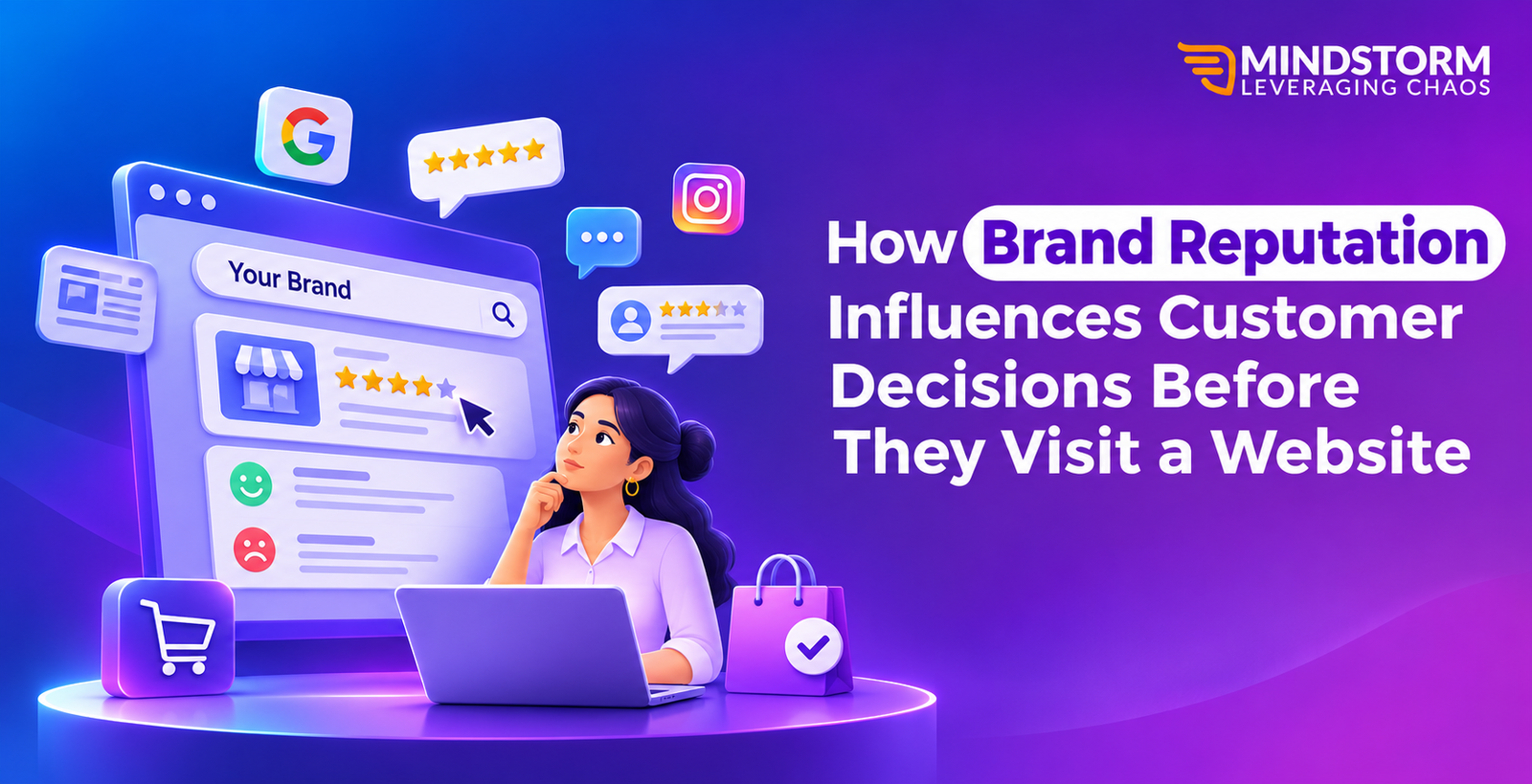
You’ve been Googled: Customers engage in pre-purchase brand research
Customers research before they buy, and the data is consistent. Google calls this stage the Zero Moment of Truth: the research between seeing a brand and buying from it.
BrightLocal’s 2026 Local Consumer Review Survey of 1,002 US adults found that 97% of consumers read reviews for local businesses. 41% always read them, up from 29% a year earlier. The average person checks six review sites when choosing a business.
India shows the same habit. Ipsos India surveyed 2,200 urban consumers in December 2024. 54% of online shoppers always check reviews and another 40% sometimes do. An Alvarez & Marsal and CII report from March 2026 puts the share of Indian shoppers who rely on reviews at 83%.
During this research, your digital reputation helps answer three important questions:
- Is this business credible and active? Recent customer reviews, updated business information and a consistent digital presence help establish confidence.
- What could go wrong? Customers look beyond the marketing claims to understand potential problems. Negative reviews and recurring complaints can become deal-breakers.
- How does this business treat its customers when something goes wrong? A company’s response to criticism often reveals more about its values and service standards than its promotional communication.
Business buyers research too. Gartner surveyed 646 B2B buyers in August and September 2025. 67% prefer a buying process without a sales rep, and 45% use generative AI to research purchases. Your next client may know a lot about you before your team knows they exist.
These are not simply questions about customer satisfaction. They influence purchase intent, particularly when a customer is comparing several businesses offering similar products or services.
What Does a Customer Actually See When They Google Your Brand?
Imagine someone has received a recommendation about your business. Before calling you, they search your brand name. What do they find? Your website may appear at the top of the search results, but it isn’t the only information competing for their attention.
They might also see:
- Your Google Business Profile and customer ratings.
- Reviews on independent platforms and business directories.
- Social media comments and customer discussions.
- News articles, media mentions and industry coverage.
- Third-party recommendations and comparison websites.
- Conversations on community forums.
- Information generated by AI-powered search tools.
Each of these sources contributes to the impression a potential customer forms.
A business may have an impressive website and a strong advertising presence, but repeated complaints on review platforms can create doubt. Similarly, an outdated listing, unanswered customer concerns or inconsistent information across directories can make a business appear less reliable.
This brings us to an important distinction: visibility and credibility are not the same thing. Your website, advertising and social media may communicate what your brand promises. Your digital reputation provides an independent perspective on whether customers believe that promise.
When these two sides don’t align, customer confidence can suffer. And that can affect the journey from initial discovery to enquiry and conversion.
How Negative Online Sentiment Costs You Leads Before They Ever Call
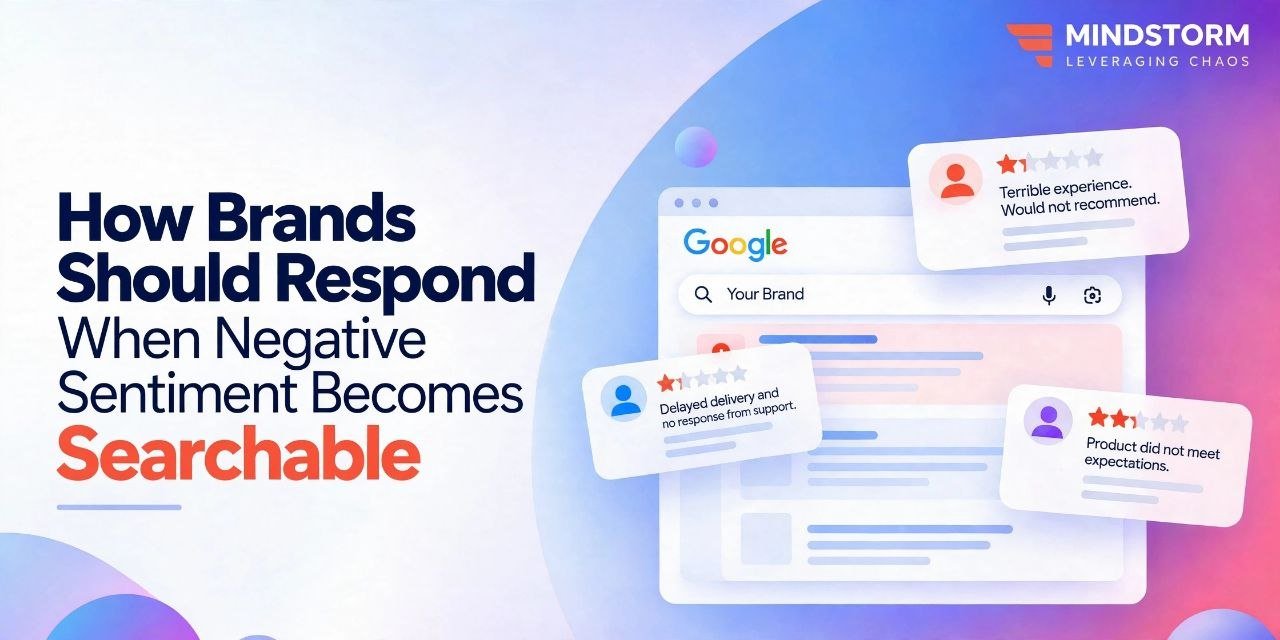
Negative reviews can influence a customer’s decision before your business gets an opportunity to explain itself. LocalImpact surveyed 1,068 US adults in July 2026, and 88% said they had decided against a business after reading negative reviews.
Consider this: A potential customer searches for your company, comes across a complaint about poor service or an unresolved delivery issue, and decides to explore another option. Your sales team never receives the enquiry. There is no opportunity to explain, reassure or convert that prospect. The business may never even know that the customer was lost.
Sometimes that one negative review on a Google listing, which you’ve never addressed, is enough to do the damage. Silence makes it worse.
It’s human nature to pay more attention to what could go wrong than what could go right!
A good rating drives curiosity immediately, and a poor rating exponentially. Psychologists call this negativity bias. The positive stuff has to be consciously noticed; the negative stuff is automatically highlighted.
Humans are wired to prioritize potential threats over potential rewards. It is a survival mechanism. You see this in consumer behaviour all the time. When people are making a decision, they don’t start by looking for reasons to say yes — they instinctively look for reasons to say no. They will scroll past 50 positive reviews to find the one negative review that warns them of danger.
And smart consumers don’t just read the negative feedback, they evaluate it. Positive reviews get skimmed. Negative reviews get remembered. We naturally treat praise as background noise and criticism as a red flag. That one red flag can create enough perceived risk to kill a conversion, even when 95% of the feedback is positive. If the complaints are trivial or extreme, it actually makes them feel safer, because it tells them there is no serious threat to worry about.
Independent businesses have the most to lose. Harvard Business School researcher Michael Luca studied Seattle restaurants and Yelp, using revenue data from 2003 to 2009. A one-star rating increase raised revenue by 5 to 9%, and the effect showed up for independent restaurants. Chain restaurants saw no effect, because a chain already carries a known reputation. When customers don’t already know your brand, what others say about you becomes part of your introduction.
The Algorithm Loves Angry Comments!
Social media platforms optimize for engagement and engagement comes from strong emotion. A positive comment like “Great service!” is easy to scroll past. There is nothing to debate, nothing to investigate. It gets no replies, so the platform assumes no one cares and stops showing it.
A negative comment is different. It creates curiosity and conflict. People want to know what happened, others want to add their own bad experience, some want to defend the brand. That pile-on — the questions, the arguments, the replies — is exactly what the platform counts as engagement.
Someone has a poor experience and leaves a negative Google review. They might also share it on social media, discuss it in a community group or recommend that others avoid the business. So, the algorithm does what it is built to do: it pushes that angry comment to more feeds because it is keeping people on the app. A negative experience can become a larger reputation issue when the business ignores it, responds defensively or allows the same complaint to keep recurring.
On the other hand, a considered response demonstrates accountability and gives prospective customers a better understanding of how the business handles difficult situations. The important thing to recognise is that reputation isn’t confined to one review platform or social media account. What happens in one corner of the digital ecosystem can influence perceptions elsewhere.
Brand Reputation and Consumer Trust: Buyers Weigh It Like Price and Quality
Price and product quality have traditionally dominated purchasing decisions. But trust is another important consideration.
Trust works as a buying criterion on its own. In Edelman’s 2026 Trust and Brands report, 88% of consumers said trusting a brand is an important or critical factor when they buy. Quality scored 89% and value 88%. Reviews are where that trust gets built. Online reviews play an important role in building that confidence because they offer customers perspectives beyond what the brand communicates about itself.
Northwestern University’s Spiegel Research Center studied more than 100,000 products on e-commerce sites. A product with five reviews was 270% more likely to sell than one with none. Most of the gain came from the first few reviews.
The same research found that purchase likelihood peaked at ratings of about 4.0 to 4.7 stars and fell as ratings neared a perfect 5. A common shopping behaviour on marketplaces we’ve observed is one where the customer uses the rating filter to ensure they do not look at products or brands below 4.0 rating. Shoppers treat a flawless record with suspicion. A few honest critical reviews make the good ones believable.
Turn a Bad Review Into an Opportunity to Demonstrate Accountability
Research on the service recovery paradox shows that a customer whose problem is put right well can end up more loyal than one who never had a problem. Repeated failures, serious service issues and slow or inadequate resolutions can make the situation worse.
What matters is how the business responds. Remember, a public review response isn’t being read only by the person who wrote the complaint. Future customers are watching too. They want to know whether the business listens, takes responsibility and makes an effort to resolve issues.
Use this process:
- Reply within 24 to 48 hours. Don’t let customer complaints sit unanswered.
- Name the specific problem. “Your order arrived four days late” shows you read the review. “We value your feedback” shows you did not.
- Apologise for the experience and skip the argument. A public argument rarely benefits the brand. Acknowledge the customer’s experience and focus on resolving the issue.
- Move the details offline. Give a named person or department and a direct contact.
- Fix it, then confirm it. Follow-up is the most critical part of recovery. If the business promises to investigate, call back or resolve an issue, it needs to deliver.
- Close the loop and find the cause. Add a short update to your reply, then log the complaint. If three customers mention the same delay, the process needs fixing, and no reply will do that.
A first reply can be this short: “Thank you for bringing this to our attention. Your order was due on the 10th and arrived on the 14th. We understand how frustrating that must have been, and we apologise for the delay. Our customer service manager will contact you today to help resolve this.”
Google Reviews, Maps, ChatGPT: Where Do Customers Check You Before They Call?
The places people check and research businesses continues to evolve, and shift fast. Google Maps helps people evaluate local businesses, compare ratings and find practical information. Apple Maps and other discovery platforms also contribute to how customers find businesses.
Social media research means people look at comments, discussions, customer experiences and how brands engage with their communities. And now, AI-powered tools are changing how people gather information. A prospective customer might ask ChatGPT to recommend a service provider, compare businesses or summarise what people are saying about a particular company.
These tools can draw on information available across the digital ecosystem, including third-party sources and publicly available discussions. This means that what customers have written about your brand can influence how AI tools describe it.
This is why managing digital reputation requires a broader understanding of where brand conversations happen, how information is presented and how different platforms influence customer perception. An unanswered Google review is one part of the picture. A recurring complaint across multiple platforms, inconsistent business information or negative third-party coverage can create a much larger challenge.
Brand Reputation and Consumer Trust: Habits to Build Before a Complaint Arrives
A good reputation isn’t built overnight, and it certainly isn’t built by responding to negative reviews alone. Businesses need to be consistent in how they engage with customers and how they manage their digital presence.
- Ask every customer. Make it easy for them to share their experience by requesting feedback at appropriate points in the customer journey. Ask right after delivery or a finished job, with a direct link. Skip rewards, since platforms ban paid reviews.
- Thank people who praise you. A reply that mentions what the customer said shows readers that real people work there. Personalised responses help demonstrate that there are real people behind the brand.
- Keep profiles current. Check hours, photos and contact details monthly. The first question buyers ask is whether you are active.
- Pay attention to the conversations happening around your brand. Customer feedback often appears in social media discussions, community forums, third-party platforms and other digital spaces. These conversations can reveal how customers perceive your business beyond the feedback you receive directly.
- Check what a prospect sees on AI. Search your brand name, and ask ChatGPT and Google’s AI answers to describe your business. Fix the sources they draw from.
Reputation Is Already Influencing Your Next Customer
By the time a prospective customer visits your website, they may have read reviews, explored social media, compared you with competitors or looked at what independent sources have to say. That impression can influence whether they contact you, consider your offering or move on to another business. A well-designed website and a strong marketing campaign can bring people to your brand. But if the reputation they discover doesn’t inspire confidence, the opportunity to convert them becomes harder.
At Mindstorm, we understand that online reputation management goes beyond collecting reviews or responding to customer complaints. It involves understanding how your brand is perceived across digital platforms and managing the many conversations and information sources that influence customer trust.
From review management and digital reputation to brand perception across search engines, social media and other online platforms, we help businesses take a more strategic approach to protecting and strengthening their reputation.
As a digital marketing agency in Mumbai, we work with brands to ensure that their digital presence and public perception support the business they are building. Because your reputation is already part of your marketing. The question is whether you’re managing it.
Looking to understand how your brand is perceived online? Speak to Mindstorm about online reputation management.